A commercial engine with one of Asia’s best street-food maps
Ho Chi Minh City is the commercial engine of southern Vietnam and it reads as one: nine million people, a river port, and traffic that runs on a logic you learn in about a day. Most travellers give it two nights, some give it three, and the reasons to stay are the War Remnants Museum, the Reunification Palace, the Cholon district and the food — not the skyline, which is the same skyline as four other Asian cities.
What this place actually is
- Region
- Southern Vietnam
- Nights
- 2 to 3 nights
- Airport
- Tan Son Nhat (SGN), 8 km, 30 – 50 min
- Best months
- December to April
- Known for
- War Remnants Museum, Reunification Palace, Cholon, street food
Saigon — almost everyone here still says Saigon, including the airport code — is where southern Vietnam does business. It handles a large share of the country’s foreign investment, its port moves the goods, and the energy people describe as atmosphere is mostly commerce running at full speed. District 1 has towers, malls and rooftop bars that would sit unremarkably in Bangkok or Jakarta. If you came a long way for a skyline, this is the wrong city; the skyline is the least distinctive thing about it.
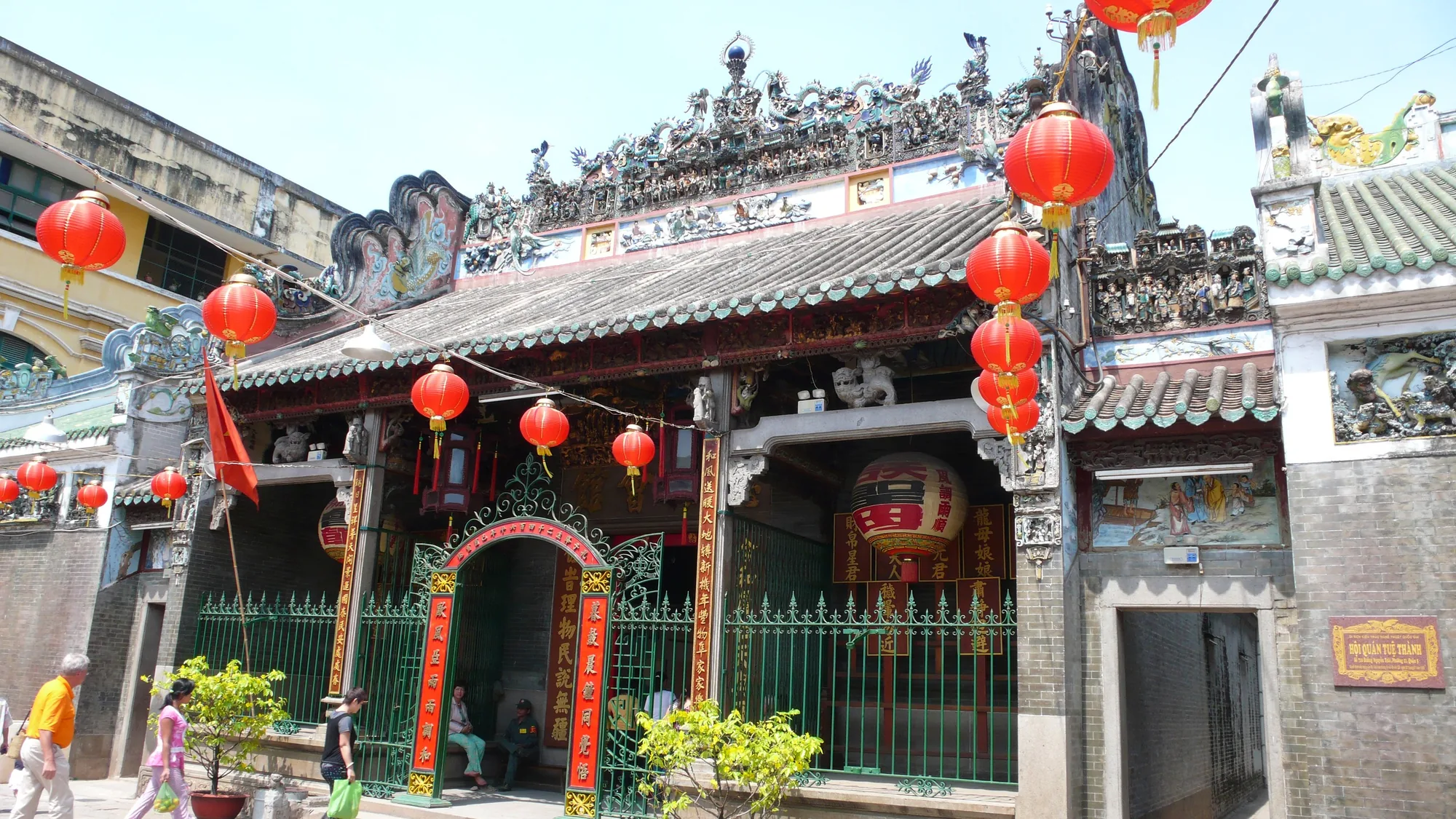
What is distinctive is the layering. The Reunification Palace stands exactly as it was on 30 April 1975, down to the maps on the war room walls and the furniture in the president’s office, and it is one of the few buildings anywhere that is a preserved moment rather than a preserved style. The War Remnants Museum is unsparing and, for many travellers, the most difficult two hours of the whole journey; children under about twelve should not be taken through the photojournalism galleries without a conversation first. Cholon, the Chinese quarter west of the centre, is a functioning wholesale district with temples inside it — Thien Hau, Quan Am — where the incense coils hang from the rafters and the trade around them is real trade, not a market built for visitors.
Then the food. This is one of the best street-food cities in Asia and the case is easy to make: banh mi that costs 25,000 VND and beats most sandwiches at ten times the price, com tam over charcoal, banh xeo folded at the table, southern-style pho that is sweeter than Hanoi’s and will start an argument with anyone from the north, and a coffee culture built on robusta, condensed milk and ice that has nothing to apologise for. An evening spent eating across three districts is a better use of a night here than any bar with a view.
The Cu Chi tunnels are a half-day: a two-hour round trip by road, a short section of widened tunnel you can crawl through, a film, and a firing range where you pay by the round. Some travellers find it worthwhile; many find it a long drive for a theme-park version of a serious history. We book it only if you ask for it, and we will say this first.
How many nights, and why fewer breaks it
Two nights is the working minimum. Three is right if you want Cholon properly or you are pairing the city with the delta. Here is where the hours go.
- Arrival day. Tan Son Nhat is 8 km from District 1, which sounds like nothing and takes 30 minutes at 11:00 and 50 minutes at 17:30. Immigration at SGN can run 30 to 60 minutes at peak. Realistically an afternoon arrival leaves you one evening, and that evening should be spent eating.
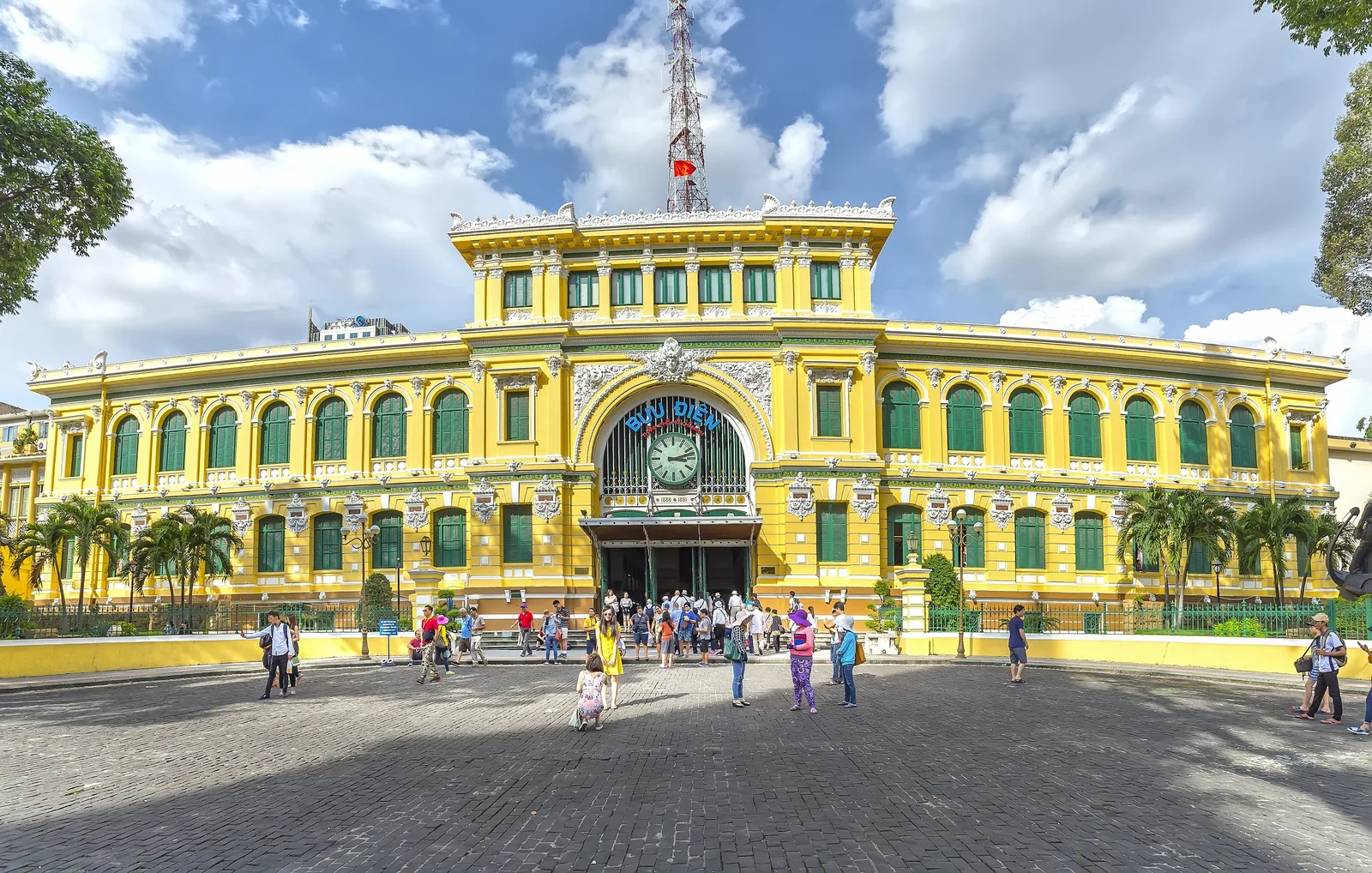
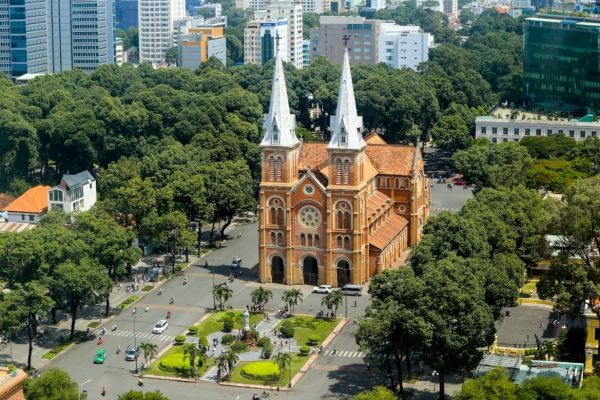
- First full day. The War Remnants Museum takes two hours and needs a decompression stop afterwards, not a second museum. The Reunification Palace takes ninety minutes. That is a morning. The afternoon holds either the post office and the cathedral quarter on foot, or a rest before an evening food route.
- Second full day. Cholon is a half-day — the temples, the herbal medicine street, Binh Tay market — and it is 8 km each way through traffic, so it eats more clock than the map suggests. The other half-day is yours: the Fine Arts Museum, the Jade Emperor Pagoda, or the tailoring and coffee streets of District 3.
- Departure. Domestic flights want you at the airport ninety minutes ahead, international three hours, and the airport road at 06:00 to 08:00 and 16:00 to 19:00 is the slowest part of the journey. A 10:00 flight means leaving at 07:30 and losing the morning.
One night does not work, and the reason is arithmetic rather than taste: one night is one evening and one morning, the two museums alone are half a day, and the transfer at each end takes an hour of it. Four nights is more than the city holds unless you are working, using it as a base for the Mekong Delta, or waiting on a flight. Where clients want a longer southern block, we split it: two nights here, one or two in the delta, then the coast.
When to go
Southern Vietnam has two seasons and neither of them is a reason to cancel. The wet season here is not the central coast’s flood season and should not be confused with it.
| Months | What it is like | What that season buys you |
|---|---|---|
| December – February | Dry, 22–32 °C, lower humidity, the pleasant end of the year. | The best walking weather and the only months you can spend a full afternoon outdoors without planning around the heat. Highest room rates; Tet closes many family-run restaurants for several days. |
| March – April | Dry and hot, 33–37 °C, humid by late March. | Still reliable for outdoor plans, and this is when the four-country calendar often lands. Start early, use the middle of the day for the museums, which are air conditioned. |
| May – August | Wet season begins. Heavy afternoon downpours, usually 30 to 90 minutes, then clear. | Green, cheaper, and far less busy. The rain rarely ends a day here — it reorganises one. Plan the museums for 15:00 and eat late. |
| September – November | Wettest stretch, with street flooding in low districts after long storms and high tides. | The lowest prices of the year and a city that belongs to the people who live in it. It is also the wrong time on the central coast, so a September itinerary that includes Hoi An needs a buffer day. |
Tet, the lunar new year, falls in late January or February and it matters more than the weather. The city empties as people travel home, many of the best small restaurants close for three to seven days, and prices for flights and hotels spike. It is a remarkable thing to see and a difficult thing to eat your way through. The when-to-go page gives the dates alongside the other three countries.
How to get there
Tan Son Nhat International (SGN) is still the airport. Long Thanh, 40 km east, has not begun commercial service, and any 2026 itinerary that routes you through it is wrong.
By air
- SGN sits 8 km from District 1 — 30 minutes off-peak, 45 to 50 minutes in the morning and evening rush. A private transfer is USD 18 to 25; a metered taxi 180,000 to 300,000 VND depending on traffic and terminal.
- Hanoi → SGN is about 2 h 10, with departures roughly every half hour across three airlines. Da Nang → SGN about 1 h 15. Phu Quoc → SGN about 1 h.
- Siem Reap → SGN is about 1 h 10 and Bangkok → SGN about 1 h 40, which makes this the usual entry or exit point for a journey that ends in the south.
- The international terminal is a five-minute walk from the domestic one. Allow three hours for an international departure and ninety minutes for a domestic one; security queues at SGN are long by regional standards.
By road
- Can Tho, in the heart of the Mekong Delta, is about 3 h 30 by expressway and highway. My Tho is 1 h 30, which is why so many delta day trips stop there and see very little.
- Cu Chi is 60 km and about 1 h 15 each way, or ninety minutes at the wrong time of day.
- Mui Ne is 4 to 5 hours east along the coast; Da Lat is 6 to 7 hours into the highlands. Both are better flown or built into a longer road leg rather than taken as an out-and-back.
By train
- Hanoi → Saigon is 1,726 km and 30 to 34 hours end to end. It is a genuine experience and it is also a day and a half; we book segments of it, not the whole run.
- Da Nang → Saigon is 20 hours or more against a 75-minute flight. We do not put clients on that leg. The stretch worth riding is Hue → Da Nang, 2 to 3 hours over the Hai Van Pass.
What things cost here
Saigon is the most expensive city in Vietnam for hotels and the cheapest place in the country to eat extremely well. Both of those statements are true at the same time.
| Item | What you pay |
|---|---|
| Clean three-star, double, breakfast | 900,000 – 1,600,000 VND (USD 35 – 62) |
| Good four-star or design hotel, District 1 | USD 110 – 200 |
| Top tier — Park Hyatt Saigon, The Reverie | USD 280 – 650 |
| Banh mi from a street cart | 25,000 – 40,000 VND |
| Bowl of pho or com tam, local restaurant | 50,000 – 90,000 VND |
| Two courses and a drink, mid-range restaurant | 350,000 – 600,000 VND per person |
| Vietnamese iced coffee | 20,000 – 60,000 VND |
| War Remnants Museum | 40,000 VND |
| Reunification Palace | 65,000 VND |
| Taxi, District 1 to Cholon | 120,000 – 180,000 VND, 25 – 40 minutes |
| Airport transfer, private car | USD 18 – 25 |
Use Grab rather than flagging a street taxi; the price is fixed before you get in and the argument disappears. Cash is still king at food stalls and in Cholon, cards are fine in hotels and restaurants, and the 500,000 VND note is worth about USD 19 and is hard to break at a cart.
What it looks like




When to skip it
- You have fourteen days and want depth rather than coverage. A Hanoi, Hue, Hoi An and Lan Ha Bay route with an extra night in each is a better fourteen days than the same route with Saigon bolted on. Fly home from Da Nang instead.
- Heat and noise cost you more than they give. This is a loud, hot, nine-million-person city with pavements that motorbikes use. Travellers who need quiet spend the two nights unhappy and remember nothing else about the south.
- You are travelling with children under about twelve and the museums are the reason you were coming. The War Remnants Museum is unsparing and the photojournalism galleries are not suitable without preparation. The city still works for families — the food and the boats do — but the itinerary looks different.
- You want Cu Chi and nothing else. That is a half-day of tunnels and a firing range, and it does not justify two nights and two transfers. If tunnels are the interest, say so and we will tell you whether the trip supports it.
The journeys that come here
The south is where most of our Vietnamese routes finish, because the flights out of SGN reach the rest of the region and because ending on the delta or a beach beats ending on a fourteen-hour train.
Full-length journeys treat it as the last mainland stop. Grand Indochina, 28 days arrives here from the central coast and continues into Cambodia by air, and Indochina Classic, 21 days does the same thing with two nights instead of three. Vietnam In Depth, 20 days gives it three nights and then the delta, which is the version that actually shows you the south rather than passing through it.
Where the city is the hinge between two countries, the shape changes again. Vietnam and Cambodia, 16 days uses the Siem Reap flight, 1 h 10, rather than the river; the Mekong river journey, 15 days starts or ends here and puts the water in the middle of the trip; and Vietnam and Thailand, 15 days connects to Bangkok in about 1 h 40. For travellers with children, the family journey, 18 days keeps the city to two nights, replaces one museum with a boat and a cooking session, and moves the third night to the coast.
If the shape you want is not on that list — three nights here and a week in the delta and the islands, say, or an entry through Saigon rather than Hanoi — send the month, the number of travellers and the two places you refuse to leave out, and a routing sketch comes back within three working days. Write to us here.
Two nights in the south, spent on the right things
Tell us your dates and whether the museums or the food are the reason. We will build the two days around whichever it is.
Questions travellers ask most
Which airport does Ho Chi Minh City use in 2026?
Tan Son Nhat (SGN), 8 km from District 1. Long Thanh has not begun commercial service, so every flight still arrives at SGN. Allow 30 minutes off-peak and up to 50 in the morning or evening rush, and three hours before an international departure — the security queues here are long by regional standards.
Is the Cu Chi tunnel trip worth a half-day?
It is a two-hour round trip by road, a short widened tunnel section you can crawl through, a film and a firing range where you pay by the round. Some travellers find it worthwhile and many find it a long drive for a theme-park treatment of a serious history. We book it only if you ask, and we say this first rather than after.
Does the wet season ruin a stay here?
No. Southern Vietnam is wet from May to November, and the pattern is a heavy afternoon downpour of 30 to 90 minutes rather than a day of rain. It reorganises a day, it rarely ends one. This is a different thing from the central coast’s September to November flood season, which does end days.
Two nights or three?
Two if the museums and one evening of food are the point. Three if you want Cholon properly, or if you are continuing into the Mekong Delta and would rather not do a long transfer on a museum day. Beyond three the city stops paying you back unless you are using it as a base.
Read next
Tell us about the journey you have in mind
Dates, party size and the places you care about are enough to start. You get a draft route and an indicative price, not a brochure.