Three or four nights of doing nothing, at the end of something long
Phu Quoc is a 570-square-kilometre island in the Gulf of Thailand, an hour by air from Ho Chi Minh City, and it has been built harder and faster than anywhere else in Vietnam. That is the first thing to know. The second is that it still does one job extremely well: it is a soft landing at the end of three weeks of temples, cities and early starts, and that is the only reason we put it in an itinerary.
What this place actually is
| Region | Gulf of Thailand, southern Vietnam |
| Nights worth staying | 3 to 4 nights, at the end of a journey |
| Nearest airport | Phu Quoc International (PQC), direct from Ho Chi Minh City in 1 h |
| Best months | November to April; December to March is the reliable window |
| Known for | Long Beach resorts, the quieter north and far south, fish sauce and pepper, warm calm water in the dry months |
Phu Quoc sits closer to Cambodia than to the Vietnamese mainland, 45 km off the Kampot coast, and it was a quiet fishing and fish-sauce island until roughly 2010. Since then it has been developed at a speed that is difficult to describe without sounding hostile. An international airport opened, a cable car was built, resort strips went up along Long Beach and Bai Sao, a large amusement complex arrived in the south, and whole stretches of coast were cleared, filled and rebuilt. Some of that development is good. Much of it is unfinished, and you will drive past building sites and empty shopfronts on the way to a beautiful stretch of sand.
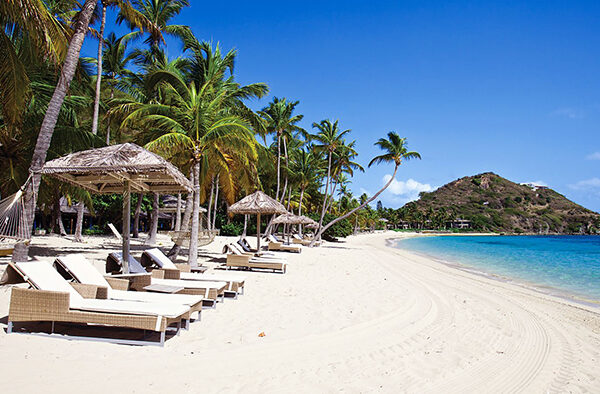
The island is not one place. The resort strip along Long Beach, running south from Duong Dong town, is where most of the hotels are and where the island feels most built — a continuous line of frontage, bars, massage signs and jet-ski touts. The north, above Cua Can, still holds forest inside Phu Quoc National Park, pepper farms and beaches with almost nothing on them. The far south, around An Thoi and the offshore islets, is boats, snorkelling and the cable car. Those three areas read as separate islands and a traveller who books the first and expects the third will be disappointed.
So we say it plainly: the reason to come is not the island. The reason is what the island does at a particular point in a journey. After eighteen days of Angkor at 07:30, Luang Prabang at 05:45 and four internal flights, a place where the day contains nothing at all is worth more than another town. Phu Quoc has direct flights, warm calm water from November to April, hotels at every level and no obligations. If you want a Vietnamese island as the point of the trip rather than its ending, this is not the strongest case in the region.
We book the hotel, the transfers, a boat with a licensed skipper for the southern islets, and a driver for the north if you want the pepper farms and the empty beaches. We do not book jet-ski hire — the beach touts sell damage claims as often as they sell rides — and we do not book captive-animal attractions of any kind, on this island or anywhere else on our routes.
How many nights, and why fewer breaks it
Three nights minimum, four if the journey behind it was three weeks or more. The arithmetic here is about recovery rather than sights.
- Arrival day is not a beach day. A morning flight from Ho Chi Minh City takes an hour, but the transfer to the airport, ninety minutes ahead of departure, the flight and the 20 to 40 minute drive to the hotel put you on a sun lounger at about 14:00 at best. That is half a day.
- Departure day is not a beach day either. Whether you fly to Saigon for an onward international connection or leave the region entirely, you are checking out in the morning. That is another half a day.
- So a three-night stay contains two whole days plus two halves. Two whole days is the smallest amount of time in which a person actually stops — the first one is spent unwinding and the second one is the one that works.
- The fourth night adds the only excursion worth taking: a boat south to the An Thoi islets for snorkelling, or a drive north through the national park to a beach with nobody on it. With three nights you take one of those and lose a rest day; with four you take one and keep both.
Two nights is a wasted flight. One whole day between two travel days does not rest anybody, and the transfers cost more time than the beach returns. If the itinerary can only spare two nights at the end, we would rather add them to the coast at Hoi An or leave from Ho Chi Minh City and go home a day earlier.
When to go
Phu Quoc is in the Gulf of Thailand and takes the southwest monsoon, so its calendar is closer to the Andaman coast than to Koh Samui. Getting this wrong is the most common Phu Quoc mistake, because the island is sold year-round.
| Months | What it is like | What that season buys you |
|---|---|---|
| November – December | Dry season starting, seas settling, 26–31 °C. | Reliable water from about mid-November and the last of the shoulder pricing before Christmas. This is when a mid-November to early February four-country journey lands here. |
| January – March | The reliable window. Dry, sunny, calm, clear water, 26–32 °C. | The only stretch where you can book a snorkelling day and expect it to run. Also the peak: the good rooms go months ahead and rates are at their highest. |
| April | Dry but hot, 32–35 °C, humidity building, sea still calm. | Fewer people than February and prices below peak, with the water still good. The heat is real by mid-afternoon. |
| May – October | Southwest monsoon. Wind, rough sea on the west coast, seaweed and debris on Long Beach, rain in long spells rather than short bursts. | Half price, empty resorts and green forest in the north — and boat trips that are cancelled, water that is not swimmable on some days, and a beach that has to be cleared each morning. This is the honest trade, and we tell clients to take those nights elsewhere. |
Because our best window for a long four-country journey is mid-November to early February, Phu Quoc as a closing leg usually falls inside its good season without any special planning. That is the main reason it works for us. See when to go for how the four countries line up month by month.
How to get there
You fly. There is a ferry, and there is no good reason to take it as part of a private journey.
By air
- Ho Chi Minh City (SGN) → Phu Quoc (PQC) takes about 1 hour and runs many times a day on Vietnam Airlines, Vietjet and Bamboo. This is the connection every itinerary uses.
- Hanoi → PQC is about 2 h 15 direct. Da Nang → PQC runs but not daily, and a connection through Saigon is often faster than waiting for it.
- PQC also takes seasonal international flights, mostly from Seoul, Taipei and Central Asia in the winter. Do not build a journey around a seasonal route without checking it is still operating for your dates.
- The airport is 10 km from Duong Dong and Long Beach, about 20 minutes, and 15 to 25 km from the northern resorts, 30 to 45 minutes. A private transfer is USD 15 to 30.
By sea
- Fast ferries run from Rach Gia, about 2 h 30, and Ha Tien, about 1 h 30, both on the mainland coast. Reaching either port from Ho Chi Minh City is a 5 to 7 hour drive first.
- That makes the sea route a full day against a one-hour flight, and it is cancelled outright in rough weather during the southwest monsoon. We do not book it.
- There is no passenger service from Cambodia to Phu Quoc, despite the island sitting 45 km off the Kampot coast.
On the island
- Duong Dong to An Thoi in the far south is about 45 minutes; Duong Dong to the northern beaches 40 to 60 minutes. The main north–south road is good and the side roads to the better beaches are not.
- We put a car and driver on call rather than hiring scooters. Traffic is light by Vietnamese standards and the road surface is not, and a scooter accident at the end of a three-week journey is a bad way to end it.
What things cost here
Phu Quoc is more expensive than mainland Vietnam and cheaper than a comparable Thai island. Resort prices swing hard between the dry and wet seasons — the same room can double between September and February.
| Item | What you pay |
|---|---|
| Simple guesthouse, double | 600,000 – 1,200,000 VND (USD 23 – 46) |
| Mid-range beach hotel, dry season | USD 90 – 170 |
| Good resort, pool, beachfront, dry season | USD 220 – 450 |
| Top-tier villa resort, dry season | USD 500 – 1,200 |
| The same rooms, May to October | Typically 40 to 60 per cent less |
| Bowl of noodles or a rice plate in Duong Dong | 50,000 – 90,000 VND |
| Grilled fish dinner for two at the night market | 500,000 – 900,000 VND |
| Resort dinner, two courses and a drink | USD 30 – 60 per person |
| Private boat, half-day, southern islets | 2,500,000 – 4,500,000 VND for the boat |
| Phu Quoc National Park entry | Free on the main trails; some managed beaches charge 30,000 – 100,000 VND |
| Taxi, airport to Long Beach | 150,000 – 250,000 VND |
| Cable car to Hon Thom | 300,000 – 600,000 VND depending on package |
Beach-front rates on this island are quoted in dollars and change with the season more than with the property. If a resort is offering a dry-season room at a wet-season price, check the dates twice before you assume you have found value.
What it looks like



When to skip it
- Your dates fall between May and October. The southwest monsoon puts wind and debris on the west-coast beaches, cancels the boats and turns a rest into a wait. Those nights are better spent on the central coast or simply not spent.
- You are looking for an unspoilt island. It is not one. The island has been built hard and fast, the resort strip is continuous, and the drive to the quiet beaches in the north passes construction. Say what you want from an island and we will tell you honestly whether this is it.
- Your journey is under sixteen days. Three nights of beach out of fourteen is a fifth of the trip spent horizontal, and there is not enough room left for the mainland. Add the island to a twenty-day route or leave it out.
- You want activity rather than rest. There is snorkelling, a cable car and a large amusement complex, and that is close to the whole list. Diving here is modest by regional standards, the walking is limited, and travellers who cannot sit still are bored by the second afternoon.
The journeys that come here
Only two of our routes finish on Phu Quoc, and both do it for the same reason: they are long, and they end better with three or four nights of nothing than with a final city.
Vietnam In Depth, 20 days runs Hanoi, Lan Ha Bay, Hue, Hoi An, Ho Chi Minh City and the delta, and then puts four nights on the island at the end. By that point the journey has covered 1,700 kilometres of country and five internal moves, and the island is the recovery rather than the reward. The Mekong river journey, 15 days ends here too, coming off the water at the delta and flying south for three nights before the flight home.
Where clients ask for a beach on a shorter route, we usually point them elsewhere. The honeymoon journey, 16 days puts its beach nights on the central coast near Hoi An instead, which saves an internal flight and lands in a better season for a November or December departure. The family journey, 18 days does the same. Neither decision is about the island being poor; it is about not spending two flights and a transfer day to reach sand that exists closer to the rest of the route.
If you want the island for four or five nights at the end of a twenty-day journey, that is exactly the case it is good for, and we will build it. Send the month, the number of travellers and the length you have in mind — write to us here and a routing sketch comes back within three working days.
A long journey that ends with nothing on the schedule
Tell us your dates and how long the trip is. We will say whether the island earns its flights, or whether the coast does the same job closer.
Questions travellers ask most
Is Phu Quoc worth including at all?
As the ending of a long journey, yes. As a destination in its own right, it is a weaker case than the island’s marketing suggests. It has been built hard and fast, the resort strip on Long Beach is continuous, and the quiet parts are in the north and the far south rather than where most hotels are. What it offers is a one-hour flight from Ho Chi Minh City, calm water from November to April and three or four days with nothing on the schedule.
When is the water actually good?
November to April, with December to March the reliable window. The southwest monsoon runs May to October and brings wind, rough sea on the west coast, debris on Long Beach and cancelled boat trips. Rooms are 40 to 60 per cent cheaper in those months, and we still tell clients to put the nights somewhere else.
What will you not book here?
Jet-ski hire, because the beach touts sell damage claims as often as they sell rides, and captive-animal attractions of any kind. We also do not book the mainland ferries: a 5 to 7 hour drive plus a 1 h 30 to 2 h 30 crossing, cancellable in bad weather, against a one-hour flight.
Three nights or four?
Three nights is two whole days plus two half days, because the arrival and departure both cost you a morning or an afternoon. Four nights gives you the boat trip to the southern islets or the drive north through the national park without losing a rest day. Two nights is a wasted flight.
Read next
Tell us about the journey you have in mind
Dates, party size and the places you care about are enough to start. You get a draft route and an indicative price, not a brochure.