Grand Indochina: twenty-eight days from Hanoi to Bangkok
Four countries in four weeks, arranged in the order the map allows rather than the order a brochure prefers. You start in Hanoi and finish in Bangkok, with a driver and a national guide in each country, every internal flight held before you leave home, and no border crossing that cannot actually be made in 2026.
The route
- Length
- 28 days, 27 nights
- Group
- Private. Two to eight people, your party only
- Starts
- Hanoi (HAN)
- Ends
- Bangkok (BKK)
- Pace
- Moderate. Three nights in six of the thirteen places
- From
- USD 7,000 per person, land only
Thirteen stops, twenty-seven nights, seven internal flight sectors and one train. Nothing on this list is a photo stop from a moving vehicle.
Who this journey is for
This is a first long look at mainland Southeast Asia for people who would rather see four countries properly than six countries from a coach window. The traveller who books it is usually between fifty and seventy, has four weeks free because of retirement or a sabbatical, has done Europe thoroughly and is now doing Asia, and does not want to repack every second morning. Couples take it most often. Two couples travelling together take it next most often, which is why the price drops sharply at three and again at five.
It also suits a family with adult children, where the parents pay and the children are in their twenties and can handle a five-hour drive without asking how much longer. The pace is honest: twenty-eight days sounds indulgent until you count that four of them are spent moving between countries. What you buy with the length is the ability to stop — a free afternoon in Hoi An, a second morning at Angkor when the first was too crowded, a day in Luang Prabang with nothing in it at all.
What the twenty-eight days contain
- Three nights in Hanoi, enough to walk the Old Quarter twice and still have an afternoon free
- A night on Lan Ha Bay, entered from Haiphong, where the boat count is a fraction of the Ha Long core
- The Hai Van Pass driven in daylight between Hue and Hoi An, not slept through on a night train
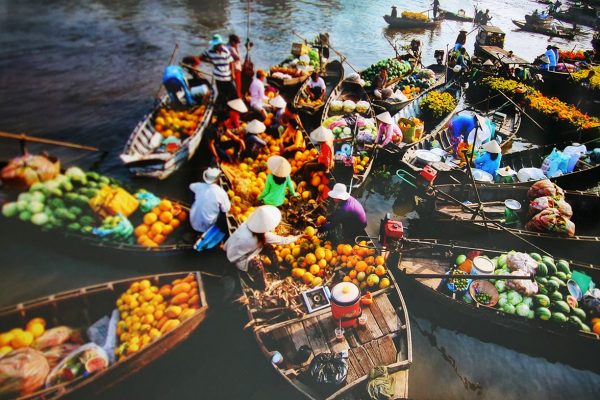
- A dawn at Cai Rang floating market in Can Tho, on the water by half past five
- A three-day Angkor pass at USD 62 and three separate mornings to use it
- The alms round in Luang Prabang watched from five metres, in silence, from the pavement
- The Laos–China Railway from Luang Prabang to Vientiane in 1 h 50 instead of ten hours by road
- Northern Thailand in the cool, clear window before the burning season begins
How the route is put together
The order is dictated by two hard facts. The first is that all four Thailand–Cambodia land crossings have been closed since 23 June 2025 — Poipet–Aranyaprathet, Cham Yeam–Hat Lek, O’Smach–Chong Jom and Ban Pakard–Pailin — and Thai authorities have said they do not plan to reopen them during 2026. Any itinerary that sells you an overland Bangkok to Siem Reap leg is selling something it cannot run. Thailand therefore sits at the end of this route and is reached by air.
The second is that Siem Reap connects directly to Luang Prabang: Vietnam Airlines flies it five times a week in 1 h 25. That single flight is what makes a sensible four-country loop possible without doubling back through Bangkok in the middle. From Luang Prabang the journey drops south to Vientiane by train, then flies to Chiang Mai, usually via Bangkok, because there is no direct service worth waiting for.
The Lan Ha Bay night sits early, on day four, and the itinerary carries slack behind it. Quang Ninh and Haiphong authorities close the ports outright on storm warnings, and cruises are cancelled — that is what happened after the 19 July 2025 capsize during Tropical Storm Wipha. If the boat does not sail, you gain a night ashore in Haiphong or Ninh Binh and lose nothing else on the route. Travel insurance is required for this trip and we will ask to see it.
Day by day
Every day below is written out. Where a day is deliberately empty, it says so.
Arrive Hanoi
Your guide meets you inside the arrivals hall at Noi Bai and the drive into the Old Quarter takes about forty-five minutes. Nothing is scheduled afterwards. Land at eight in the morning and you can walk to Hoan Kiem Lake before dinner; land at midnight and you sleep.
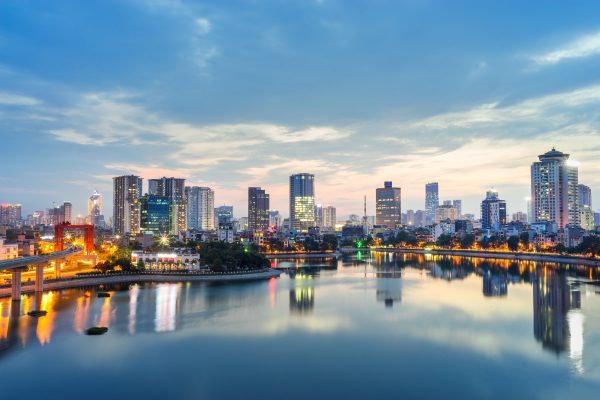
Hanoi on foot
The walk starts at eight, before the guild streets fill: Hang Bac for silver, Hang Thiec for beaten tin, Hang Ma for paper offerings. Lunch is bun cha at a pavement grill with plastic stools. The afternoon covers the Temple of Literature and the Museum of Ethnology, and you are back at the hotel by five with your feet up.
Hanoi, at your own speed
Morning at the Ho Chi Minh complex and the One Pillar Pagoda, which takes about two hours including the queue. The afternoon is free and your guide and car stay with you: most people use it for the ceramic kilns at Bat Trang, a coffee at a rooftop above the lake, or nothing at all. Dinner is on your own so you can eat when you are hungry rather than when a schedule says so.

Hanoi to Lan Ha Bay
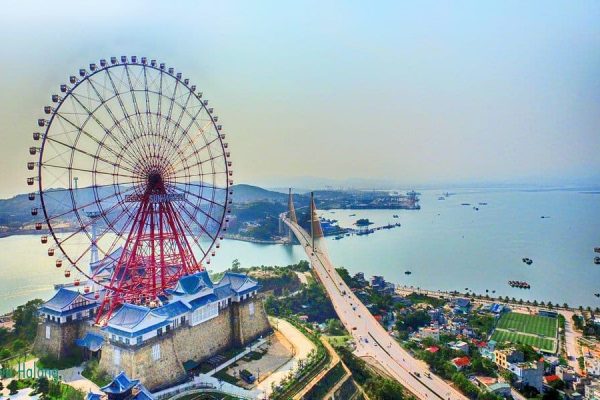
You leave at eight on the Hanoi–Haiphong expressway and board at Got pier around midday. Lan Ha is entered from Haiphong rather than Tuan Chau, and the difference is visible within twenty minutes: fewer hulls, quieter anchorages, water you can actually swim in. Kayaks go out in the afternoon and the boat anchors for the night among the karsts.
Lan Ha Bay to Ninh Binh
Tai chi on the sun deck at half past six for those who want it, brunch as the boat returns, and you are ashore by eleven. The drive south to Ninh Binh runs about two and a half hours through the delta. Late afternoon you take a rowing boat at Tam Coc or Trang An, when the day trippers from Hanoi have gone and the light is low on the limestone.
Ninh Binh to Hue
Bai Dinh or Hoa Lu in the morning, depending on how much walking you want, then the drive back to Noi Bai for the early afternoon flight. Hue is an hour and ten minutes in the air. Your Hue guide meets the flight and the evening is free on the Perfume River, where the walking is flat and the restaurants are close together.
Hue, the Hai Van Pass, and on to Hoi An
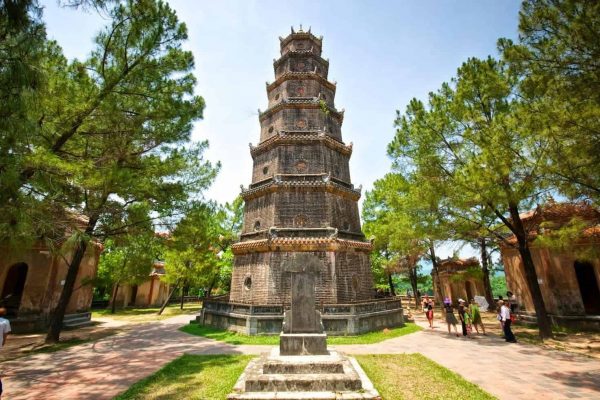
The Imperial City opens at seven and you are inside by half past, before the heat and the tour groups; entry is 200,000 VND and the site takes two hours at a reasonable pace. One royal tomb follows — Minh Mang for the symmetry, Tu Duc for the shade. Then the car climbs the Hai Van Pass in daylight, which is the whole point of driving this leg rather than flying it, and drops into Hoi An by late afternoon.
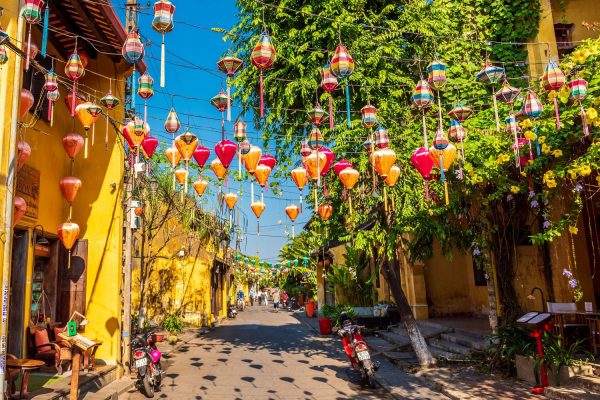
Hoi An old town
The old town ticket is 120,000 VND and admits you to five of the twenty-two heritage buildings; your guide picks the five that are worth the time rather than the five nearest the car park. Morning covers the Japanese covered bridge, a Chinese assembly hall and a merchant house still lived in by the family that built it. The afternoon is free, and most people spend it with a tailor or on the beach.
Hoi An, and My Son if you want it
My Son opens early and the Cham brick towers are best before nine, when the light is still low and the site is nearly empty; it is a forty-five minute drive each way. If ruins in heat are not your idea of a good morning, the alternative is a cooking class in a garden kitchen or a bicycle out through the rice to An Bang beach. The evening is yours either way.

Hoi An to Ho Chi Minh City
A slow morning — the flight from Da Nang is deliberately after lunch so you do not waste a Hoi An dawn on an airport. The transfer to Da Nang runs about fifty minutes and the flight south is an hour and twenty. Ho Chi Minh City arrives as a wall of noise after ten days of small towns, which is the correct order to meet it in.
Ho Chi Minh City
The morning is the War Remnants Museum and the Reunification Palace, in that order, because the palace is easier to look at afterwards than before. Lunch is in a market hall, then the Central Post Office, the Jade Emperor Pagoda and an hour in the alleys off Ton That Thiep where the coffee is. Cu Chi can replace the afternoon if you would rather, at the cost of three hours in the car.

Down to the delta
The road to Can Tho takes about three and a half hours with a stop at Cai Be or Vinh Long for a boatyard and a fruit orchard. The delta is not scenic in the postcard sense: it is flat, brown, busy and entirely about water as a road. Afternoon on a sampan through the small canals, then an early dinner because tomorrow starts before dawn.
Cai Rang at dawn, then Phnom Penh
You are on the water at half past five. Cai Rang is a wholesale market and it works whether or not anyone is watching: boats sell by the sack, the goods hang from a pole so buyers can read them from a distance, and by eight it is mostly over. Back to Ho Chi Minh City by road, then the fifty-minute flight to Phnom Penh, landing at Techo International Airport.

Phnom Penh
Tuol Sleng in the morning and Choeung Ek after it, with the audio guide, and your guide will leave you alone inside both because that is the right way to do it. This is a hard half day and the itinerary does not pretend otherwise. The afternoon is the Royal Palace, the Silver Pagoda and the National Museum, which holds the best Khmer sculpture anywhere and prepares you for Angkor.
Phnom Penh to Siem Reap
National Road 6 takes about five and a half hours with a proper lunch stop at Kampong Thom, and the drive shows you the countryside that the flight hides: stilt houses, dry season paddy, roadside markets selling grilled river fish. If you would rather not spend the day in a car, the 45-minute flight is available at no extra cost and you arrive by lunchtime. Either way the afternoon is free and the first temple waits until tomorrow.
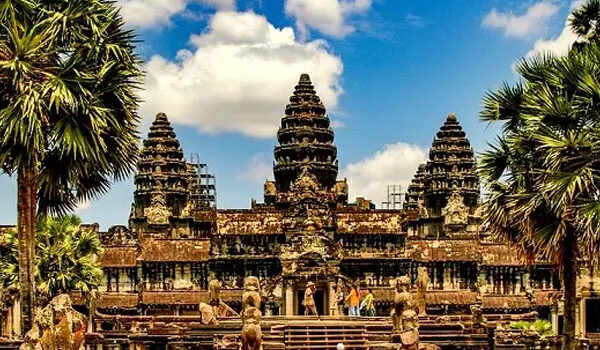
Angkor, first morning
Angkor Wat opens at five and you are at the west causeway for it, which costs you a dark alarm and buys you the galleries before the heat. The three-day pass is USD 62 and covers today, tomorrow and one further day within ten. After the bas-reliefs you cross to Angkor Thom for the Bayon faces and the Terrace of the Elephants, and you are back at the hotel by half past eleven for the middle of the day.
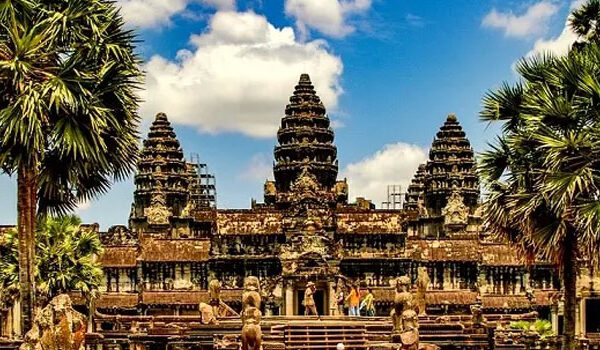
Angkor, second morning
Ta Prohm early, on the boardwalks, then Preah Khan, which has the same trees and a fraction of the people. Banteay Srei is forty minutes further out and the pink sandstone carving there is the finest in the park — it is worth the drive. Afternoon free; sunset at Phnom Bakheng is possible but the hill has a hard 300-person cap and your guide will tell you honestly whether it is worth queueing for.

Siem Reap to Luang Prabang
A last free morning — the Angkor pass still has a day on it if you want a third temple run, or there is the Artisans Angkor workshop and a long breakfast. The flight to Luang Prabang leaves in the early afternoon and takes 1 h 25; Vietnam Airlines runs it five times a week and it is the reason this route works as a loop. Luang Prabang airport is four kilometres from town and you are at the hotel within twenty minutes of landing.
Luang Prabang
The alms round passes between six and seven at this time of year. You watch from the pavement, at least five metres back, in silence, with your shoulders and legs covered and no flash — and if you would rather not watch at all, that is a reasonable choice and nobody will push you. Later: the Royal Palace Museum, the Traditional Arts and Ethnology Centre, and the 328 steps up Mount Phousi in the cool of the afternoon.

Kuang Si, or nothing at all
Kuang Si is thirty kilometres out and the pools are turquoise because of dissolved limestone, not because of a filter; go early and you have the lower terraces to yourself. The bear sanctuary at the entrance is a rescue centre and there is no riding, feeding or photographing with animals anywhere on this trip. Come back for a late lunch and leave the afternoon empty, which is the most valuable thing on offer in Luang Prabang.
Luang Prabang to Vientiane by rail
The Laos–China Railway does this leg in 1 h 50 against roughly ten hours by road, which is the single biggest time saving on the whole itinerary. Your seats are bought weeks in advance through an agent, because station windows open only three days ahead and second class sells out in the dry season. Both stations sit well outside town — twelve kilometres at Luang Prabang, fifteen at Vientiane — so the transfers are part of the day.
Vientiane, then Chiang Mai
A short morning: That Luang, Wat Sisaket with its thousands of small Buddhas, and the Patuxai arch, which is made of American cement intended for a runway. There is no direct flight to Chiang Mai, so this leg routes through Bangkok and takes most of the afternoon. You land in Chiang Mai in the evening, and the air is noticeably cooler and drier than anything since Hanoi.
Chiang Mai
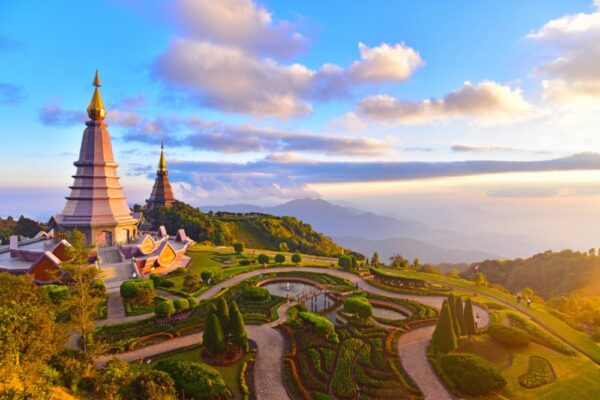
Wat Phra Singh and Wat Chedi Luang in the old city in the morning, on foot inside the moat. After lunch the road climbs to Doi Suthep, 1,073 metres up, where there are 306 steps or a funicular and the view back over the plain is worth the traffic. Evening free; the Sunday walking street is genuinely good if your dates land on it.
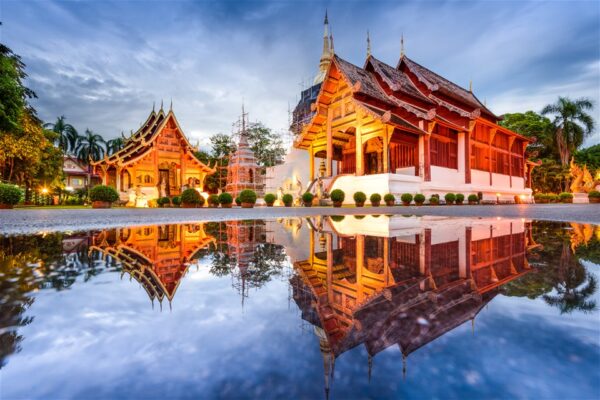
Chiang Mai, your day
Options, and you pick one: a Thai cooking class that starts at a market and ends with lunch you cooked; a day at an ethical elephant sanctuary where you observe and feed but never ride and never bathe with them; or a workshop day in San Kamphaeng with the lacquer and umbrella makers. There is no commission stop on this itinerary, so nobody will steer you into a gem shop. The evening is free.
Chiang Mai to Bangkok
The flight is 1 h 20 and is scheduled late morning so you keep the last Chiang Mai breakfast. Bangkok arrives with heat and traffic; the transfer from Suvarnabhumi runs forty-five minutes to an hour and a half depending entirely on the time of day. The afternoon is deliberately soft — a long-tail boat on the Chao Phraya, or the hotel pool, and dinner near the river.
Bangkok
The Grand Palace opens at half past eight and closes its ticket desk at half past three; entry is 500 baht and the dress code is enforced at the gate, so covered shoulders and knees, no exceptions and no sarong hire queue if you arrive dressed. Wat Pho and the reclining Buddha follow at 300 baht, then a boat across to Wat Arun. The afternoon ends in the flower market at Pak Khlong Talat, which is busiest after dark.

Bangkok, last day
Nothing is scheduled. Most people use it for Jim Thompson House, the canals of Thonburi by long-tail, a final tailoring fitting or a massage. Your guide and car are available for as much or as little of it as you want, and the evening is free for a last dinner.
Depart Bangkok
Late checkout is requested as a matter of course and usually granted. The transfer to Suvarnabhumi is timed to your flight with the traffic allowed for, which in Bangkok means leaving earlier than seems necessary. Four weeks and four countries end at the departure hall.
What it costs
Prices are per person, twin share, land only, and fall as the party grows because the car, the driver and the guide cost the same whether two of you or six are in them.
| Party size | Comfortable | Excellent |
|---|---|---|
| 2 travellers | USD 8,960 | USD 13,890 |
| 3 – 4 travellers | USD 7,700 | USD 11,940 |
| 5 – 8 travellers | USD 7,000 | USD 10,850 |
Over twenty-eight days that works out at roughly USD 250 to USD 500 per person per day. Comfortable means four-star hotels with character and a well-run Lan Ha boat; Excellent means the houses people know by name and a cabin with a private deck. The full breakdown of what each standard buys is on the pricing page, and the deposit and payment steps are on how to book.
What is included, and what is not
What the price includes
- Twenty-seven nights in the hotels named in your quote, twin share, breakfast included
- One night aboard a small Lan Ha Bay cruise in a cabin with a window
- A private car and driver in each of the four countries, yours for the whole day rather than for transfers
- A separate English-speaking national guide in Vietnam, Cambodia, Laos and Thailand
- All internal and regional flights listed in the day-by-day, in economy with a checked bag
- Second-class seats on the Laos–China Railway from Luang Prabang to Vientiane, booked weeks ahead
- Airport, pier and station transfers on arrival and departure in every city
- Entrance fees to every site named above, including the three-day Angkor pass at USD 62
- Meals exactly as marked on each day: breakfast daily, plus the lunches and dinners listed
- Cold water in the car, and a 24-hour local telephone number in each country
What it does not include
- International flights into Hanoi and out of Bangkok
- Visas: the Vietnamese e-visa, the Cambodian e-visa at USD 30 plus USD 6 processing, and the Lao visa on arrival at roughly USD 30 to USD 45
- The three arrival cards — the Thailand Digital Arrival Card, the Cambodia e-Arrival form and the Lao Digital Immigration Form. All three are free and you file them yourself
- Travel insurance, which we require on this journey and will ask to see before departure
- Tips for guides and drivers
- Meals not listed in the day-by-day, and all drinks including with included meals
- Laundry, spa treatments, minibar and other hotel extras
- Anything you add on the road: a third Angkor morning, a cooking class, a second massage
The journey in pictures



Who this journey is wrong for
Four countries in four weeks is a real commitment. These are the reasons people cancel, and it is better to read them now than to find out on day fifteen.
- You dislike long car days. Phnom Penh to Siem Reap is five and a half hours on National Road 6, Ho Chi Minh City to Can Tho and back is three and a half each way, and Hanoi to Haiphong is two and a half. The flight alternatives exist but the road days are part of the route.
- You cannot stand heat on stone. Angkor mornings in the shoulder months run past 32 °C by ten o’clock, and in March to May the park reaches 35 to 40 °C. There is no shade on the Angkor Wat causeway and none on the upper terraces.
- You want to travel in October or November and see central Vietnam dry. That is typhoon and flood season on the Hue–Hoi An coast, worst in October and November, and Hoi An old town floods most years. Book those months and you accept the risk in writing.
- You want a shorter version. We do not run journeys under twelve days, and we will not compress this one into eighteen — cutting six nights out of it turns four countries into an airport tour. Look at the 21-day Indochina Classic instead.
- You want to ride an elephant, visit an orphanage, or be driven to a gem, silk or lacquer showroom for the commission. None of that appears here and we will not add it. Children under about ten also struggle with a fixed twenty-eight-day schedule — the family journey is built differently.
Ask us about the twenty-eight days
Tell us your month and your party size and we will send a dated itinerary with hotels named and a firm price.
Questions travellers ask most
Can we cross from Thailand into Cambodia by land to save a flight?
No. All four Thailand–Cambodia land crossings have been closed since 23 June 2025, following the border clashes of July and December 2025. The ceasefire is holding in 2026 but Thai authorities have said there is no plan to reopen the crossings this year.
Bangkok to Siem Reap and Bangkok to Phnom Penh must be flown, and the flight is about 1 h 15. This itinerary never relies on that border in either direction: Thailand sits at the end and is reached by air from Vientiane.
Twenty-eight days is a long time. Are there days with nothing in them?
Yes, deliberately. Day 3 in Hanoi, day 9 in Hoi An, day 20 in Luang Prabang, day 24 in Chiang Mai and day 27 in Bangkok are all free or optional, and the car and guide stay with you on each of them.
That is the difference between twenty-eight days and a compressed three-week trip. Cutting those days would save you money and cost you the journey.
What happens if the Lan Ha Bay cruise is cancelled?
Quang Ninh and Haiphong authorities close the ports on storm warnings and every boat stays alongside. That is not a theoretical risk: a tourist boat capsized on 19 July 2025 during Tropical Storm Wipha with at least 37 deaths, and cruises were suspended for a safety review before resuming.
The bay night sits on day 4 with slack behind it, so a cancellation costs you the cruise and not the rest of the route. You are moved to a hotel ashore, the cruise portion is refunded to you, and travel insurance covers the difference. This is one reason we require insurance on this journey.
How many visas do we need, and can you get them for us?
Four countries, but not four visas for everyone. Vietnam runs an e-visa open to all nationalities for up to 90 days; 24 countries including the UK, Germany, France, Italy, Spain, the Netherlands, Japan and South Korea hold a 45-day exemption instead, while US, Canadian, Australian and New Zealand passports get no exemption and must hold the e-visa. Cambodia is an e-visa at USD 30 plus USD 6 processing, about three working days. Laos issues a visa on arrival for 30 days at roughly USD 30 to USD 45.
Thailand exempts 60 countries and territories, and from 15 September 2026 that exemption is 30 days rather than 60, which is ample for the three Thai nights here. Separately, three free arrival cards are mandatory and must be filed by you: Thailand’s TDAC within 72 hours of arrival, Cambodia’s e-Arrival within seven days, and the Lao LDIF. We send you the official links and the deadlines, we check that each one is done before you fly, and we charge nothing for it. See visas and entry.
Read next
Tell us about the journey you have in mind
Dates, party size and the places you care about are enough to start. You get a draft route and an indicative price, not a brochure.