The Mekong from Angkor to the sea
Three nights at Angkor, seven aboard a river ship working down the Tonle Sap and the Mekong through Phnom Penh and the Vietnamese delta, then two nights in Saigon and two on Phu Quoc. The river sets the pace for the middle week, and the middle week is the reason to come.
Who this journey is for
- Length
- 15 days, 14 nights
- Group
- 2 – 8, your party only
- Starts
- Siem Reap
- Ends
- Phu Quoc
- Pace
- Easy — one long drive, seven days afloat
- From
- USD 5,600 per person
This route suits travellers who want a country to arrive slowly, and who are content to let a ship decide where they wake up for a week. The middle seven days are not a transfer with a bar attached. They are the trip: villages that have no road frontage, a border crossing done by river rather than by queue, and a landscape that changes from lake to river to delta while you sit still.
The two ends are deliberately different in character. Siem Reap is early mornings and stone, and it asks something of you. Phu Quoc asks nothing at all, which is the point of putting it after a week on the water and two days in Saigon traffic.
It also suits people who have decided against a large cruise. The ships on this river carry between 20 and 62 guests, not 200, and the shore excursions leave in groups small enough to walk into a house rather than file past it. Guests who want a swimming pool, a spa and three restaurants to choose from should book a hotel, not a river ship.
What the fifteen days give you
- A three-day Angkor pass at USD 62, used across three mornings rather than burned in one long day.
- Seven nights in one cabin, unpacked once, with the river doing the moving.
- Koh Chen, where two villages either side of the water have worked silver and copper for generations, reached by tender rather than by coach.
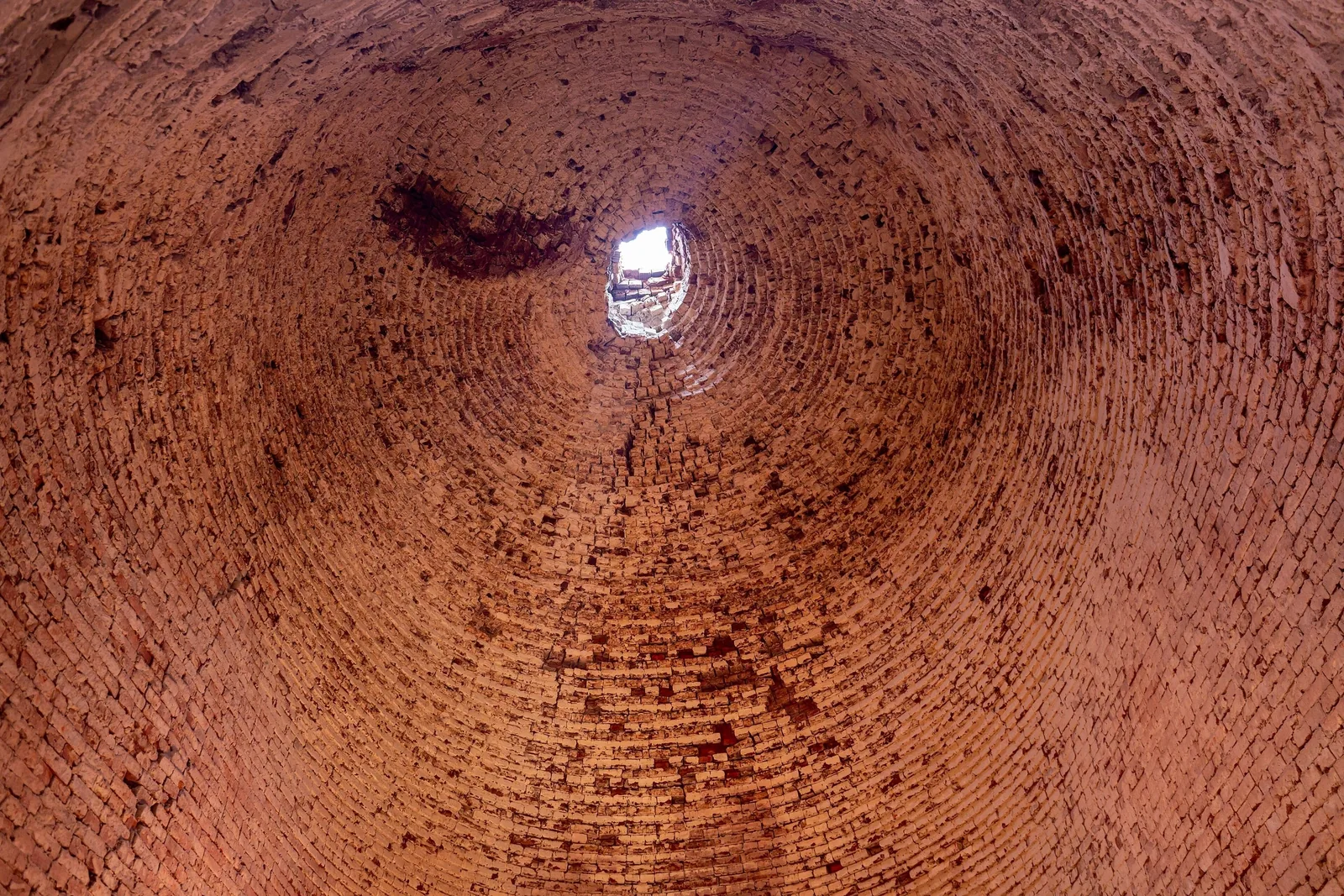
- Wat Hanchey, a pre-Angkorian brick sanctuary from the eighth century standing on a bluff above the Mekong, with a long flight of steps and a view down the river.
- Oudong, the royal capital before Phnom Penh, and the stupas along its ridge.
- A morning at S-21 and Choeung Ek with a guide who has been briefed to answer questions and to stop when asked.
- The Kaam Samnor and Chau Doc river border, where the ship handles the formalities and you stay aboard.
- Sa Dec, Cai Be and the delta workshops, then Saigon and two nights of sea air on Phu Quoc.
The ships, the price band, and the catch nobody advertises
Four operators run this route to a standard we will put our name to in 2026. Pandaw sails seven nights from about USD 3,879 per person and runs the plainest ships on the river, teak and brass, no pool, cabins with a shared promenade deck. Heritage Line operates the Jahan and the Jayavarman, both seven nights, with larger cabins and a more decorated interior. Aqua Expeditions runs the Aqua Mekong, twenty suites, and sits at the top of the market. Avalon Waterways fills the middle with a larger, more conventional ship.
The realistic market band for seven nights is USD 3,900 to USD 9,000 per person. Our price on this page assumes a Heritage Line-class cabin with a private balcony, because that is the level at which the cabin stops being a compromise and the itinerary is still the reason you booked. If you want the Aqua Mekong we will quote it, and the figure will land well above the table below.
From roughly December to July the lake and the upper river are too shallow for a river ship to cross Tonle Sap to Siem Reap. In those months the ship starts or finishes at Kampong Chhnang and the Siem Reap leg is driven or flown. This is normal and every honest operator plans for it. Operators who sell “Siem Reap to Saigon by ship” twelve months a year are selling a coach transfer they have not mentioned in the brochure. On this journey the Siem Reap leg is a road transfer by design, quoted as such, so nothing changes when the water drops.
August to November gives the full river route with the lake crossing possible at the top of the range. December to April is the better weather window and the flown or driven final leg is the trade. Neither is wrong. What matters is knowing which one you have bought before you pay the deposit.
The month-by-month picture for the whole region is set out in when to go, and what sits behind the figures below is explained on our pricing page. The deposit and the sequence are on how to book.
Day by day
Arrive Siem Reap
Your guide meets you at Siem Reap–Angkor International, which opened in October 2023 and sits 40 to 50 kilometres from town; the transfer runs 45 to 60 minutes. Nothing else is scheduled. Dinner is in the hotel or a ten-minute walk from it, depending on when you land.
Angkor Wat and the walled city
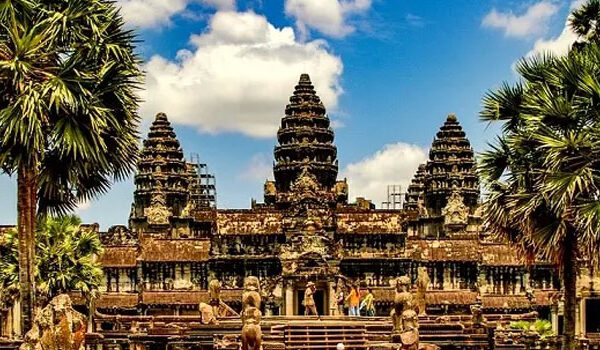
You leave at 07:30, when the park gates open, and take Angkor Wat before the middle of the day. The afternoon is inside Angkor Thom: the Bayon faces, the Terrace of the Leper King, and Ta Prohm on the boardwalks, which is where the roots are and also where the crowds are.
Shoulders and knees must be covered at the inner entrances, and the guard at the upper level of Angkor Wat turns people away for it every day.
Banteay Srei and the outer group
Banteay Srei is 37 kilometres north-east of town and the carving there is finer than anywhere else in the park, which is why you go early and why you go on a separate day. Back towards Siem Reap you stop at Banteay Samre or Pre Rup depending on the light and on how much stone you can still take in.
The afternoon is free. Most people sleep.
Siem Reap to Kampong Chhnang, and aboard
The drive south is the longest road day of the trip, roughly four and a half hours with a stop at Kampong Thom or a roadside market, depending on the route the driver takes. The ship is waiting at Kampong Chhnang. You board in the afternoon, the purser takes your passport for the Vietnamese border formalities later in the week, and the ship casts off at dusk.

Koh Chen
Koh Chen is two villages facing each other across the Tonle Sap river, and both of them beat silver and copper by hand — bowls, betel boxes, temple fittings. You go ashore by tender and walk in among the workshops, which are the front rooms of houses rather than a showroom. Nothing is on commission and nobody will follow you.
The ship sails through the afternoon. The upper deck is the best place to be between four and six.
Oudong
Oudong was the royal capital for two and a half centuries before the court moved to Phnom Penh, and the stupas of four kings stand along the ridge above the plain. The climb is about 500 steps and there is shade at the top. Cambodians come here to make merit rather than to sightsee, and on a weekend you will be the only foreigners on the hill.
The ship reaches the Mekong confluence at Phnom Penh in the evening and turns upstream.
Wat Hanchey and Kampong Cham
Wat Hanchey stands on a bluff above the Mekong with a small brick sanctuary from the eighth century, pre-Angkorian and still standing, next to a modern pagoda and a school of young monks who will practise their English on you if you let them. The steps up from the landing are steep and there is a road alternative for anyone who would rather ride.
In the afternoon the ship works back downstream past Kampong Cham and the bamboo bridge crossing to Koh Paen, rebuilt by hand every dry season.
Phnom Penh: a hard morning, and an afternoon that is not
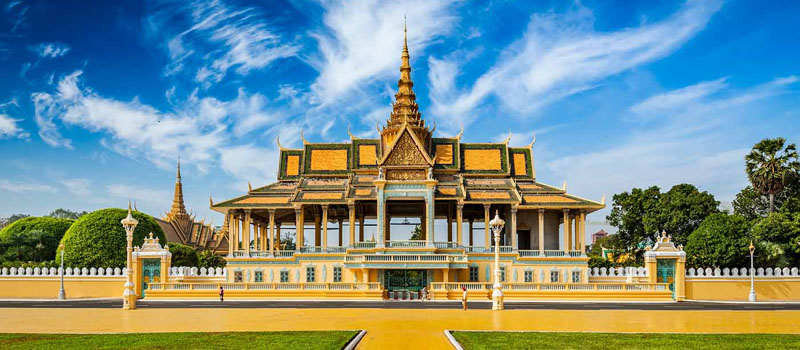
The morning goes to Tuol Sleng, the school the Khmer Rouge turned into security prison S-21, and then to the killing field at Choeung Ek. It is a hard three hours and it is meant to be. You may decline it outright — say so at breakfast and the guide will take you to the Royal Palace and the National Museum instead, with no discussion and no cost.
Whoever goes will want the afternoon quiet. The ship stays alongside until evening, so the choice is the deck, the Central Market, or nothing at all.
The river border: Kaam Samnor and Chau Doc
Cambodian exit formalities happen at Kaam Samnor and Vietnamese entry at Chau Doc, both handled by the ship with the passports the purser collected on day four. You stay aboard. The formalities take an hour or two and the crew will tell you when they are done rather than making you wait at a counter.
Chau Doc in the late afternoon is fish farms under floating houses and a sampan ride through the Cham village on the far bank. Sam Mountain is the alternative if you would rather have a view than a boat.
Sa Dec and Cai Be
Sa Dec is where Marguerite Duras spent part of her childhood and the Huynh Thuy Le house is open to visitors; the flower nurseries along the canal are the town’s real business and are at their best before the Lunar New Year. Cai Be follows in the afternoon: rice paper dried on bamboo racks, coconut candy pulled by hand, popped rice.
These are working sheds, not a demonstration built for a coach. You will be offered tea and you will not be steered towards a till.
Disembark My Tho, drive to Ho Chi Minh City
The ship comes alongside at My Tho after breakfast and the week ends there. The drive into Ho Chi Minh City is about an hour and three quarters, and the last twenty minutes of it will feel longer than the seven days you have just spent on the water.
The afternoon is free. Your guide will take you out at six for the streets around Ben Thanh if you want them, or leave you alone if you do not.
Ho Chi Minh City
A half day covers the Reunification Palace, the post office and the streets of District 1, then Cho Lon, the Chinese quarter, and the Thien Hau temple with its coils of incense burning down from the roof. The War Remnants Museum is available and is another hard hour; it is your call and we will not put it in the car without asking.
Afternoon and evening are yours. The rooftop bars are a cliché and they are also the only way to see how large this city has become.

Fly to Phu Quoc
A morning flight from Tan Son Nhat takes about an hour. The transfer from Phu Quoc airport to the north or the west coast runs 20 to 45 minutes depending on the hotel. Everything after check-in is unscheduled, and that is deliberate.
Phu Quoc
Nothing is planned. The island has a national park across its northern half, a pepper farm or two worth an hour, and a fish sauce warehouse in Duong Dong that smells exactly as you would expect. Most guests do none of it.
If you want a boat to the An Thoi islands in the south, tell your guide the day before and it will be waiting.
Depart Phu Quoc
A transfer to the airport for your flight to Ho Chi Minh City, Hanoi or Bangkok, timed to your connection. Phu Quoc has a handful of international services, and if yours is one of them you can leave the country from the beach.
What it costs
| Party size | Comfortable cabin | Suite |
|---|---|---|
| 2 travellers | USD 7,170 | USD 11,110 |
| 3 – 4 travellers | USD 6,160 | USD 9,550 |
| 5 – 8 travellers | USD 5,600 | USD 8,680 |
What is and is not included
What the price includes
- Fourteen nights: three in Siem Reap, seven aboard the river ship, two in Ho Chi Minh City, two on Phu Quoc.
- Seven nights full board aboard the ship, including all shore excursions and the guides who lead them.
- A private English-speaking guide in Cambodia and a second in Vietnam, each working in their own country.
- A private car with a driver for every land transfer, including the Siem Reap to Kampong Chhnang run.
- The domestic flight from Ho Chi Minh City to Phu Quoc, booked in advance in economy.
- The three-day Angkor pass at USD 62 and every other entrance fee named in the itinerary.
- Breakfast every morning, plus the meals shown day by day.
- Cambodian and Vietnamese border formalities at Kaam Samnor and Chau Doc, handled by the ship.
- Airport meet-and-greet at Siem Reap and a 24-hour contact number in each country.
What it does not include
- International flights into Siem Reap and out of Phu Quoc.
- Visas: the Cambodian e-visa at USD 30 plus USD 6 processing, and a Vietnamese e-visa where your passport requires one.
- Travel insurance, which we require and will ask to see before departure.
- Drinks aboard the ship beyond what your fare includes, and all drinks ashore.
- Lunches and dinners on the days marked breakfast only.
- Tips for the ship’s crew, your guides and drivers.
- Laundry, spa treatments and anything charged to your cabin or room.
- The optional boat to the An Thoi islands on Phu Quoc.
The journey in pictures



Who this journey is wrong for
There are four kinds of traveller who should book something else, and it is cheaper for everyone if that happens now rather than in month three of planning.
- Anyone who wants to be in Siem Reap by ship between December and August. The water is not there. Nobody can sail it, and anyone who says otherwise is quietly putting you on a coach.
- Anyone who needs a gym, a spa, a pool and a choice of restaurants. River ships carry 20 to 62 guests and have one dining room, one bar and a sun deck.
- Anyone prone to seasickness who assumes a river is flat. It usually is, but the delta in the wet season has wake, wind and cargo traffic, and the ship moves.
- Anyone who wants to skip the Phnom Penh morning and also wants the guide to explain Cambodia. The two things are connected and we will say so.
- Anyone travelling on under USD 200 per person per day. This route cannot be run at that number and we would rather tell you than sell you a worse version of it.
Ask about a departure
Tell us your month and we will tell you whether the lake crossing is possible, and what the ship costs that week.
Questions travellers ask most
Can the ship really reach Siem Reap?
Only in high water, roughly August to November, and even then it depends on the year. Tonle Sap Lake drops far enough between December and August that no river ship can cross it, and the Siem Reap leg becomes a drive or a flight.
This itinerary is built with the drive from the start, so the plan does not change when the water does. If you travel in September or October we will tell you whether the crossing is on and offer it as a substitution.
What does a cabin cost, honestly?
Seven nights on this river sells between about USD 3,879 per person on Pandaw and roughly USD 9,000 per person on the Aqua Mekong. The figures in our table assume a Heritage Line-class balcony cabin on the Jahan or the Jayavarman.
The rest of the price covers three nights in Siem Reap, two in Saigon, two on Phu Quoc, guides, drivers, the domestic flight and the Angkor pass.
Is the S-21 and Choeung Ek morning compulsory?
No. Say at breakfast that you would rather not go and your guide will take you to the Royal Palace and the National Museum instead. There is no charge either way and no one will ask you to explain.
If you do go, expect three hours that are difficult from the first room. The guide is briefed to answer questions plainly and to stop talking when you want the silence.
Which visas do we need?
Cambodia: an e-visa at USD 30 plus USD 6 processing, valid 30 days single entry, about three working days at evisa.gov.kh, or visa on arrival at USD 30 at the airport. The separate Cambodia e-Arrival form is free and mandatory, filed at arrival.gov.kh.
Vietnam: the e-visa is open to all nationalities for up to 90 days. Twenty-four countries hold a 45-day exemption, but US, Canadian, Australian and New Zealand passports do not and must carry an e-visa.
Read next
Tell us about the journey you have in mind
Dates, party size and the places you care about are enough to start. You get a draft route and an indicative price, not a brochure.