Sapa, where the trip happens below the town
Sapa sits at about 1,500 metres in the far north-west, five and a half hours from Hanoi. The town itself has been rebuilt in concrete over the last fifteen years and is still being rebuilt. The rice terraces in the Muong Hoa valley below it have not been, and they are the reason to make the journey. This page is about that distinction, and about the eleven hours of road that two nights here will cost you.
The short version
- Region
- Lao Cai, northwest Vietnam
- Nights
- 2
- From Hanoi
- Noi Bai (HAN), then 5 h 30 by expressway
- Or
- Overnight train to Lao Cai, then 1 h
- Best months
- September–November, March–May
- Known for
- Rice terraces, Muong Hoa valley, Fansipan
What this place actually is
Sapa town is a construction site. It began as a French hill station, it was a quiet market town into the 1990s, and it is now several hundred concrete hotel blocks stacked up a hillside, with a cable-car terminus, karaoke bars, a lake that has been rebuilt more than once, and cranes working through most of the year. The main square is rarely not being dug up. Anyone who tells you the town has charm is describing a photograph taken in 1998 or a single restored villa surrounded by nine storeys of rendered blockwork.
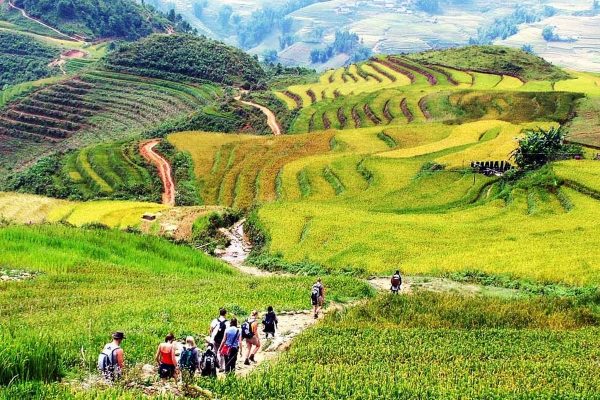
The valleys below the town are a different country. Drop 300 to 600 metres into Muong Hoa and you are among terraced rice cut into the hillsides over generations, working farms, water buffalo on the paths, and villages — Lao Chai, Ta Van, Giang Ta Chai, Ta Phin, Ban Ho — that are places people live in rather than exhibits. The walking is on farm tracks and irrigation bunds, muddy after rain, steep in places, and between eight and fourteen kilometres on a full day. This is the trip. Everything else is the car park you leave from.
One honest note on the ethics of the place. Hmm and Dao women walk with visitors along the valley paths, in their own clothes, speaking good English learned entirely from tourists, and at the end of the walk they ask you to buy textiles. That is a real trade and not a scam, though the pressure at the end can be firm. What we do not book, here or anywhere, is a staged village performance, a school visit or a workshop that pays commission. Our guides in this valley are local and the walk goes through farmland at the pace of the farmland.
How many nights, and why fewer breaks it
Two nights, and the arithmetic is almost entirely about the road.
- Day one is the transfer. Leaving Hanoi at 08:00 puts you in Sapa around 13:30 to 14:00 after five and a half hours, in time for lunch and a short afternoon walk on the ridge above the valley. Nothing serious happens on this day.
- Day two is the full walking day: down into Muong Hoa in the morning, lunch in a village, along the valley in the afternoon, and back up by vehicle. Six to eight hours out, eight to fourteen kilometres.
- Day three is a short morning — the Saturday market at Bac Ha if the calendar aligns, or Ta Phin and the Red Dao villages — and then the drive back, arriving in Hanoi in the early evening.
Take a night out of that and the full walking day is what disappears, because the transfer days cannot be compressed. You would have driven eleven hours in total to spend an afternoon looking at terraces from above. Three nights is worth having if you want two full walking days plus Ban Ho or Ta Phin, and the overnight train can absorb one of the transfers, which is why some parties prefer it: the sleeper leaves Hanoi in the evening, reaches Lao Cai in about eight hours, and an hour of road brings you up to the town for breakfast.
Either way the total cost of Sapa is about two and a half days of a journey. On an eighteen-day route that is a lot; on a twenty-day route through Vietnam alone it is affordable, which is exactly why it appears where it does.
When to go
Altitude changes everything here. Sapa runs ten degrees below Hanoi and the cloud base often sits below the town, which is why two visitors in the same week can come back with entirely different reports.
| Months | What it is like | What it buys you |
|---|---|---|
| September–November | 15–25 °C, clear, dry underfoot. The terraces turn gold in late September and are cut through October. | The best month pair of the year. Gold terraces, firm paths and long views down the valley. |
| March–May | 15–24 °C, showers building through May, hillsides flooding and being planted. | Water in the terraces reflecting the sky, wildflowers on the passes, and fewer walkers than autumn. |
| June–August | 20–28 °C, heavy rain, the terraces at their greenest. | The strongest green of the year, paid for with mud, leeches on the lower paths and occasional landslides that close a valley track for a day. |
| December–February | 0–12 °C, fog that can sit over the town for days at a time, and occasional snow on Fansipan and rarely in the town itself. | Empty trails, the lowest room rates of the year, and frost on the terraces on a clear morning. It also buys a real chance of seeing nothing at all. |
Between December and February the cloud can close over the valley for two or three consecutive days. There is no view, the paths are slick, and the walking day becomes a walk in white. If your journey falls in that window and Sapa is the reason you are coming to Vietnam, move the dates rather than the destination.
How to get there
By road
- Hanoi to Sapa is about 320 km and 5 h 30 door to door on the Noi Bai–Lao Cai expressway, plus the 38 km climb from Lao Cai up to the town.
- From Noi Bai airport directly, without entering Hanoi, the drive is roughly the same and avoids the city traffic. This works well on an arrival day if your flight lands before 09:00, though we would rather give you a night in Hanoi first.
- That drive is above our five-hour cap for a touring day, which is why it is a dedicated transfer day with nothing else in it.
By rail
- The overnight sleeper from Hanoi to Lao Cai takes about eight hours in a four-berth soft sleeper cabin, and private carriages with two-berth cabins run on the same train.
- From Lao Cai station it is about an hour by road to the town, climbing most of the way.
- The train saves a daytime transfer and costs you a night of proper sleep. Parties travelling with children or over about seventy usually prefer the expressway in daylight.
There is no airport
- The nearest is Hanoi Noi Bai (HAN). A Sapa airport has been announced more than once and is not operating, so anyone quoting you a flight to Sapa is quoting something that does not exist.
- The Fansipan cable car from Muong Hoa station near the town is the fastest way to 3,143 metres and takes about twenty minutes. Whether the summit is in cloud is a coin toss outside the autumn.
What things cost here
| Item | What we see |
|---|---|
| Comfortable hotel room in or near the town | USD 45–90 per night |
| The better valley lodges and view rooms | USD 150–350 per night |
| A village homestay room, where a route uses one | USD 20–45 per night including dinner |
| A bowl of pho or thang co in the town | 40,000–70,000 VND |
| Dinner in a homestay, cooked by the family | USD 8–15 per person |
| Restaurant dinner with a beer in the town | USD 10–20 per person |
| Valley and village entry tickets | 50,000–150,000 VND per person depending on the valley |
| Fansipan cable car, return | Roughly 700,000–900,000 VND per adult |
| Private car with driver, Hanoi to Sapa, one way | USD 130–190 |
| Soft-sleeper berth, Hanoi to Lao Cai | USD 30–60; premium two-berth cabins run higher |
Sapa is the cheapest place on any of our Vietnamese routes and it is also the one where paying more changes the least. The difference between a USD 60 room and a USD 250 room here is the view from the balcony, and on a foggy week neither has one. Spend the money on a local guide and a full day in the valley instead.
The valley in photographs

When to skip it
- Your journey is under eighteen days. Sapa costs about two and a half days including the road, and on a shorter route those days come out of Hoi An or Angkor, which are worse trades.
- You are travelling between December and February and the terraces are the point. Fog can hold for days and the odds are genuinely against you.
- You cannot comfortably walk eight to fourteen kilometres on uneven, often wet clay, with 300 to 500 metres of descent and ascent. There are shorter versions of the day and they are much less than the whole.
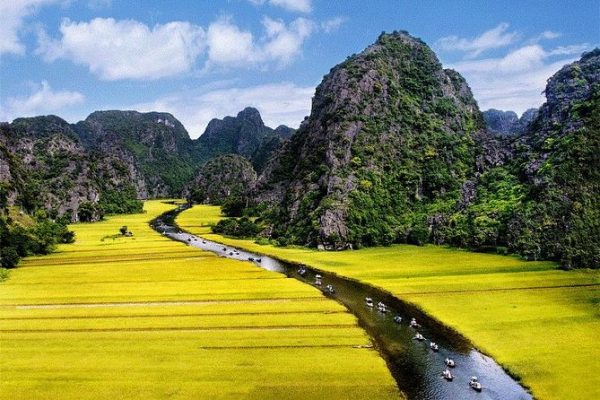
- You already have Ninh Binh or the Mekong Delta in the route and what you wanted was rural Vietnam rather than mountains specifically. Ninh Binh is under two hours from Hanoi and delivers a version of that for a fraction of the travel time.
The journeys that come here
One route only: Vietnam In Depth, 20 days. That is deliberate rather than an oversight. Sapa consumes about two and a half days once the transfers are counted, and twenty days inside a single country is the shortest journey we run that can absorb them without cutting something better. On a sixteen-day Vietnam and Cambodia route, adding Sapa means losing either the second night on the bay or a night in Hoi An, and both of those are stronger uses of the time.
If the north is what you want and twenty days is more than you have, there are two honest alternatives. Ninh Binh gives limestone and rice fields as a day from Hanoi at under two hours each way, and it appears on several routes including Vietnam and Cambodia, 16 days. Or keep the days in the north and put the second night on the water in Lan Ha Bay instead, which is the swap we suggest most often.
Adding Sapa to a route that does not have it is possible on a tailor-made basis, and the answer will always start with the same question: which two and a half days are you giving up? Send the dates through contact and we will price both versions so the trade is visible before you choose.
Questions travellers ask most
Why does Sapa appear on only one of your journeys?
Because of the arithmetic, not the place. Two nights in Sapa is really two and a half days once the five and a half hours of road each way are counted, and only Vietnam In Depth, 20 days has those days spare. On every shorter route, adding Sapa means removing a night from Hoi An or from the bay, and we think those are worse trips.
Train or road from Hanoi?
Road in daylight for most parties: five and a half hours on an expressway, arriving for lunch, with the valley visible on the approach. The overnight sleeper is the better choice when the itinerary is tight, because it converts a transfer day into a night, and the worse choice if you sleep badly on trains. Both end with the same hour of climbing road from Lao Cai.
How hard is the walking?
A full valley day is eight to fourteen kilometres with 300 to 500 metres of descent and the same climbing, on farm tracks and irrigation bunds. After rain the clay is slippery and boots with ankle support matter. Shorter loops of three to five kilometres exist and we build them where a party needs them, but they give a diminished version of the day.
Is the town itself worth an evening?
Not really, and we would rather you knew that in advance. It is a hillside of concrete hotel blocks under near-continuous construction, with a busy market and some good cheap food. Eat, sleep, and be in the valley by nine the next morning.
Read next
Tell us about the journey you have in mind
Dates, party size and the places you care about are enough to start. You get a draft route and an indicative price, not a brochure.